
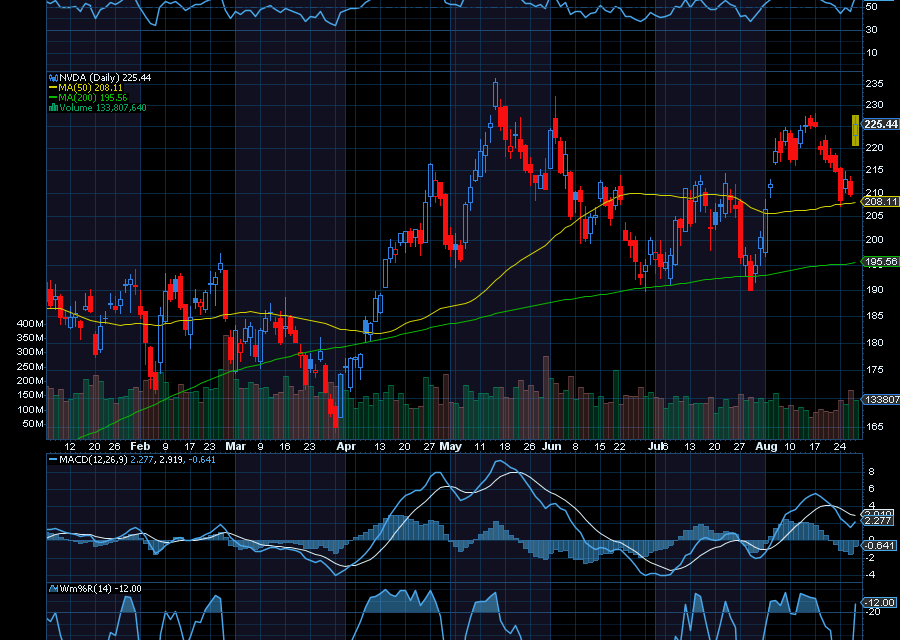
Nvidia (NASDAQ: NVDA) just posted another blockbuster quarter, giving Wall Street analysts even more reasons to be bullish on the chipmaker. The company reported $96.22 billion in revenue for its fiscal second quarter, beating the $92.17 billion estimate. Revenue jumped 106% from the same period a year earlier, when Nvidia reported $46.7 billion.
Adjusted earnings came in at $2.22 per share, also ahead of the $2.10 analysts expected.
The strong results sent Nvidia shares higher in after-hours trading. The stock was last up about 7% following the earnings announcement and also received a boost from the company’s upbeat forecast for future growth.
Nvidia Sees Another Huge Year Ahead
Investors were bullish on Nvidia’s guidance.
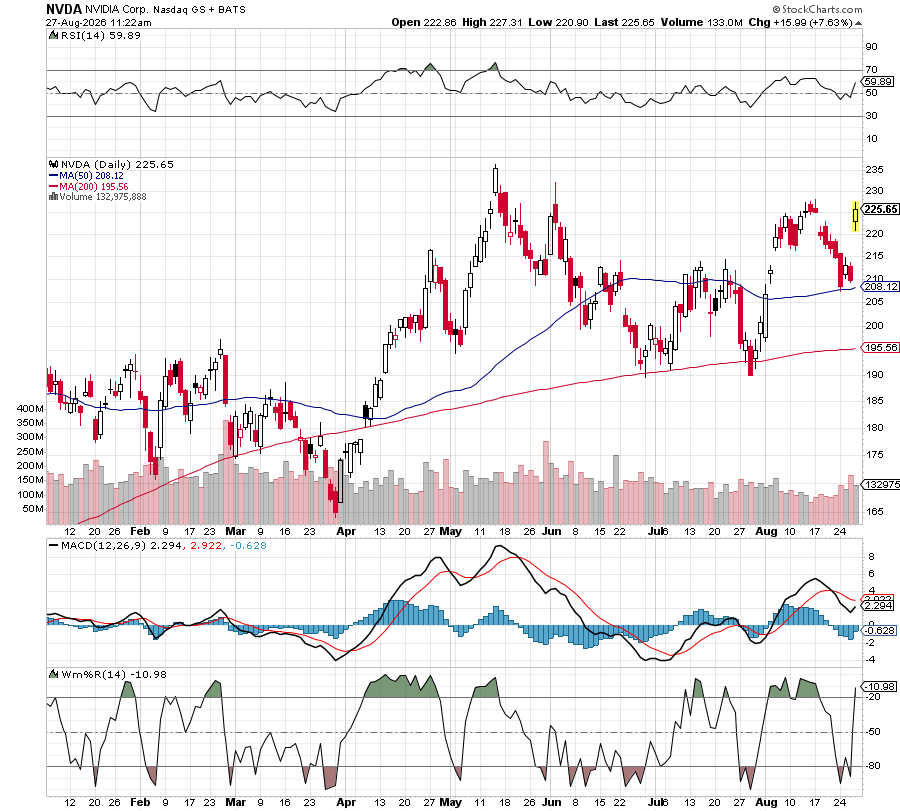

CFO Colette Kress said the company expects 70% revenue growth in fiscal 2028, well above the roughly 44% growth Wall Street had expected. Kress said customer forecasts “point to our growth doubling next year,” although she stressed that supply constraints will limit how much of that demand Nvidia can actually fulfill, as noted by CNBC.
CEO Jensen Huang has also become increasingly bullish about the AI market. He has described artificial intelligence as reaching an “inflection point” as businesses and technology companies move from experimenting with AI to building it into their operations.
Analysts See Major Upside
Bernstein analyst Stacy Rasgon said Nvidia’s latest results should remind investors why they own the stock. Rasgon pointed to the enormous demand for Nvidia’s chips and the company’s upcoming Vera Rubin product platform. The firm also has an Outperform rating on Nvidia and raised its price target to $400 from $315.
Other major Wall Street firms were also positive following Nvidia’s report.
Bank of America maintained a Buy rating and a $350 price target. The firm highlighted Nvidia’s 70% fiscal 2028 growth forecast, saying it was significantly above consensus expectations.
The bank also pointed to roughly $500 billion in cumulative multiyear supply and other commitments.
Morgan Stanley raised its price target to $300 from $288 and kept an Overweight rating. Analyst Joseph Moore said Nvidia’s longer-term revenue and gross-margin outlook was particularly encouraging.
Wells Fargo maintained an Overweight rating and a $315 price target. The firm cited Nvidia’s strong competitive position in gaming GPUs as well as its growing opportunities in data centers, high-performance computing and AI applications such as autonomous vehicles, healthcare and robotics.
Goldman Sachs raised its target to $300
Goldman Sachs raised its target to $300 from $285 and maintained a Buy rating. Analyst James Schneider said Nvidia’s outlook was consistent with the most optimistic expectations among investors and created a clearer path for the stock to outperform the broader market.
JPMorgan raised its Nvidia price target to $320 from $280 and kept an Overweight rating.
Analyst Harlan Sur highlighted Nvidia’s growing involvement in financing AI infrastructure.
Nvidia is increasingly providing financial support and other arrangements that help AI companies and data center operators raise the money needed to build new facilities.
JPMorgan believes these efforts could create new recurring revenue opportunities for Nvidia beyond its traditional hardware business.
UBS raised its price target to $300 from $280 and maintained a Buy rating. Analyst Tim Arcuri said Nvidia’s decision to provide a clearer forecast for 2027 was especially important. He also argued that demand remains well above the company’s official outlook and could rise further if Nvidia can overcome supply and data center capacity issues.
Jefferies also has a Buy rating and a $300 price target. The firm said Nvidia’s 70% growth forecast could be a floor rather than a ceiling, with demand potentially closer to 100% growth if supply were unlimited. Jefferies even sees a path toward $1 trillion in annual revenue by 2029.
The Big Question for Investors
For Nvidia investors, the latest earnings report answers one major question: AI demand is still incredibly strong. The bigger question is whether Nvidia can keep up. The company must manage supply constraints, rising memory costs and increasing competition while continuing to meet the enormous expectations built into its stock price.
For now, Wall Street appears confident.
Nvidia’s latest results suggest the AI spending boom still has plenty of room to run—and that the company’s biggest growth opportunities may still be ahead.
Sincerely,
Ian Cooper







Recent Comments