
After a sharp market pullback, tech stocks are trading at levels rarely seen — presenting potential long-term buying opportunities. In fact, according to analysts at Goldman Sachs and Wells Fargo, valuations in the tech sector have dipped to unusually attractive levels.
As noted by CNBC, “S&P 500 Index Information Technology shares have lagged the broader market with a 7% year-to-date loss as investors questioned whether heavy AI-related capital spending will translate into sustained profits. But both Wall Street firms said that weakness has pushed valuations to unusually attractive levels.”
Those reduced earnings multiples are rare. Historically, periods like this have often created some of the best long-term entry points. When a high-quality company sees its valuation decline as severely as tech stocks did, it can signal an opportunity.
To take advantage, here are two ideas.
Microsoft (MSFT)
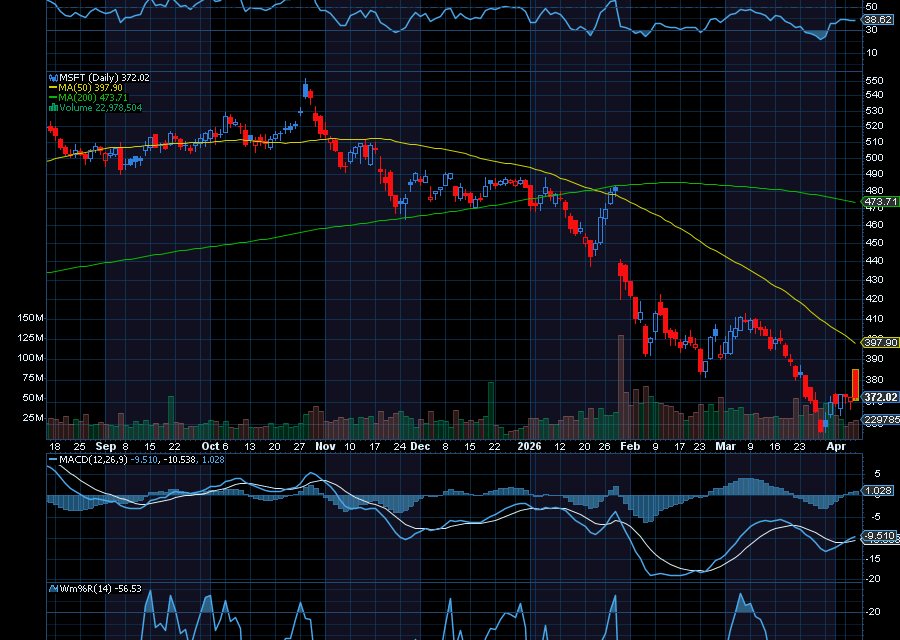
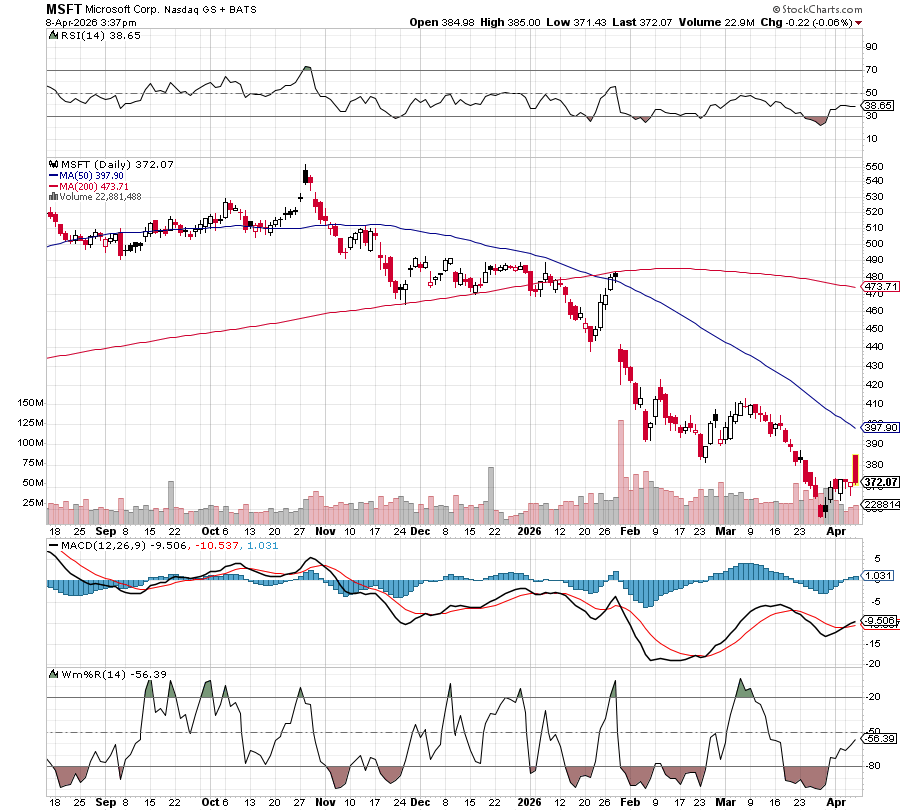
Microsoft has been one of the hardest-hit names in tech, down roughly 22% year-to-date. The stock now trades at about 22x forward P/E — a level not seen since 2016. For the first time since 2015, Microsoft is trading at a discount to the broader S&P 500.
Technically, the stock now sits at strong support dating back to April. If it can hold that, despite the war-fueled market pullback, we’d like to see the tech giant rally back to $460 initially.
At the center of Microsoft’s growth story is its cloud platform, Microsoft Azure. As more businesses shift their operations to the cloud, Azure has become one of the leading platforms powering that transition. Plus, cloud adoption is still in its early innings globally, and Microsoft continues to gain share. And it has positioned itself well with artificial intelligence.

Or, if you want greater exposure to tech at a lower cost, consider exchange-traded funds (ETFs), such as the Artificial Intelligence & Tech ETF (AIQ).
The Artificial Intelligence & Tech ETF (AIQ) invests in companies benefiting from AI and technological advancements. Its portfolio includes major names like Apple, Cisco, Nvidia, Micron, Amazon, and Netflix among its 84 holdings. The fund has an expense ratio of 0.68% and also pays a dividend — most recently just over four cents per share on January 7, with the next payment expected on July 7 for shareholders of record as of June 29.
Technically, the AIQ ETF recently fell from about $54 to a low of $44.46, where it’s starting to show signs of life again with many oversold tech stocks.
Sincerely,
Ian Cooper









Recent Comments