
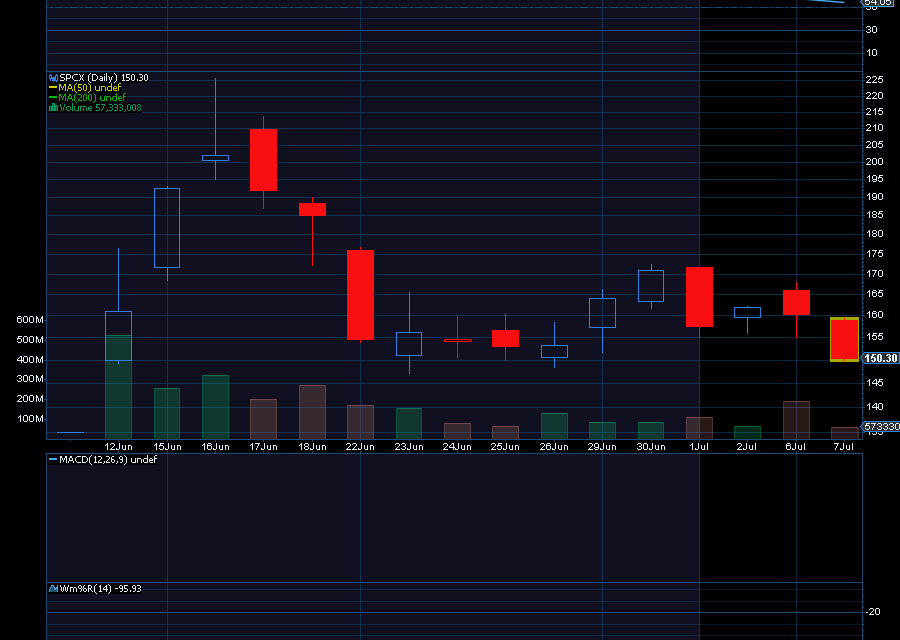
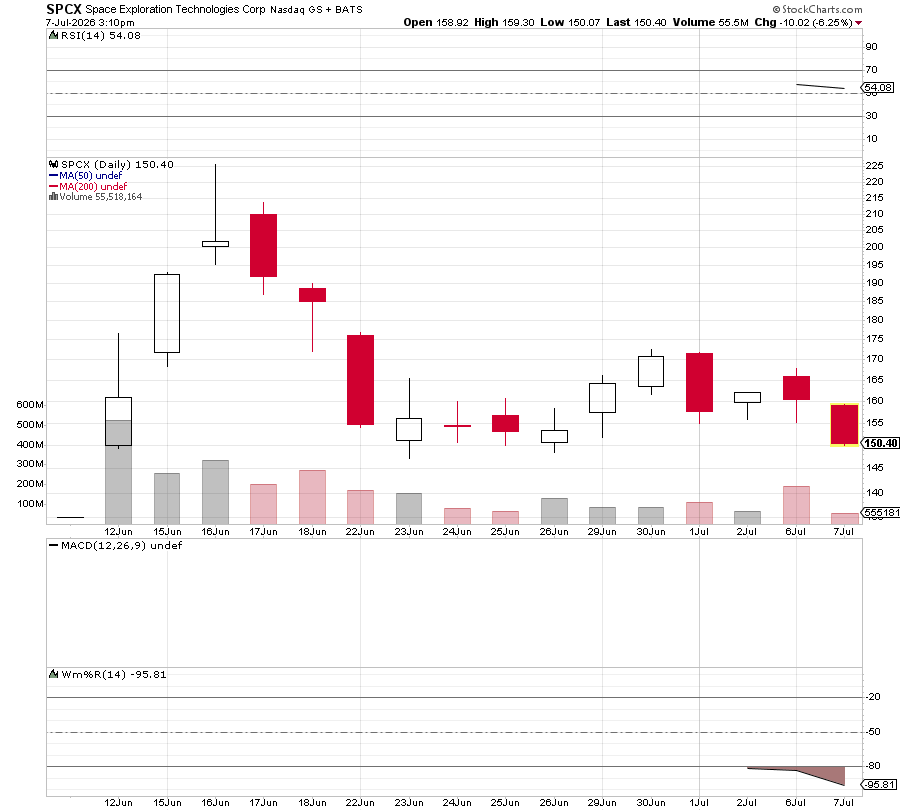
SpaceX (NASDAQ: SPCX) joining the Nasdaq-100, just weeks after completing one of the largest initial public offerings (IPOs) in market history. While becoming part of the stock index is an important achievement on its own, it could also have a significant impact on the company’s share price in both the short and long term.
For investors, the next big question is: What happens next?
The answer lies in understanding how the Nasdaq-100 works and why inclusion often creates a wave of buying pressure.

The Nasdaq-100 is made up of 100 of the largest non-financial companies listed on the Nasdaq stock exchange. It includes many of the world’s biggest technology and growth companies, and it serves as the benchmark for hundreds of billions of dollars invested through exchange-traded funds (ETFs), index funds, and mutual funds.
These investment funds are designed to match the performance of the Nasdaq-100 as closely as possible. To do that, they must own shares of every company in the index. Whenever a new company is added, those funds are required to buy the stock regardless of whether they believe it is undervalued or overvalued. That automatic buying is one of the biggest reason investors pay close attention to index additions.
According to analysts, funds that track the Nasdaq-100 could purchase roughly $4.3 billion worth of SpaceX shares after the company officially joins the index. That represents a massive amount of demand arriving over a relatively short period.
However, be cautious.
History shows that many companies experience a short-term boost around the time of index inclusion before the excitement fades and normal market forces begin to drive the stock once again. Once index funds complete their purchases, buying pressure typically slows, leaving investors to focus on the company’s earnings, growth prospects, and broader market conditions. In short, while joining the Nasdaq-100 can create a powerful catalyst, it does not guarantee long-term gains.
Sincerely,
Ian Cooper








Recent Comments