
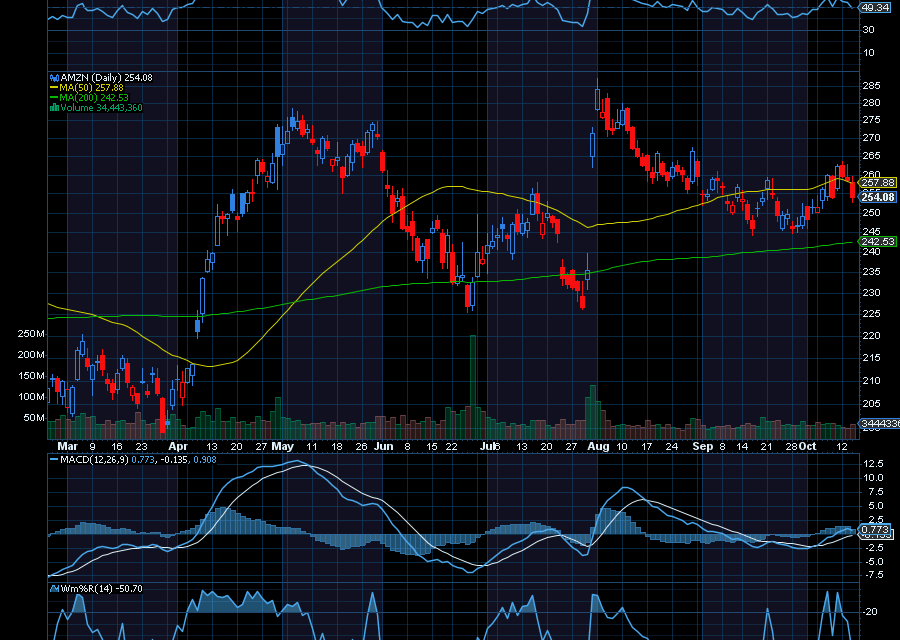
Amazon’s (NASDAQ: AMZN) upcoming earnings report will give investors a fresh look at growing demand for artificial intelligence and the cost of keeping up with it.
Several analysts have recently raised their price targets, while Goldman Sachs added Amazon to its conviction list of preferred stocks. But turning that optimism into another move higher could require more than just one earnings beat. Investors will want evidence that Amazon’s spending is translating into lasting, profitable growth. The company is expected to report third-quarter results on October 29, after the closing bell.

What Wall Street Expects
Wall Street expects Amazon to deliver another quarter of higher sales, although earnings forecasts vary across data providers.
Right now, there are estimates of EPS of $1.96 per share on revenue of about $202.1 billion.
Management projected third-quarter revenue between $197 billion and $202 billion, or growth of 9% to 12%. It also forecast operating income between $22.5 billion and $26.5 billion, compared with $17.4 billion a year earlier.
Investors should also account for the timing of Prime Day. Amazon said that excluding the event’s impact in both years would make projected third-quarter sales growth nearly four percentage points higher. Simply comparing quarterly growth rates could therefore give an incomplete picture of demand.
AWS Has a High Bar to Clear
Amazon Web Services, the company’s cloud-computing division, will likely be central to the earnings reaction. In the second quarter, AWS revenue increased 37% to $42.2 billion, its fastest growth in 18 quarters. The division generated $16.6 billion in operating income, accounting for roughly 60% of Amazon’s total.
Those numbers explain why investors watch AWS so closely. Stronger cloud demand can have an outsized effect on Amazon’s overall profits. The question now is whether that momentum continued through September. Investors will be looking for evidence that customers are expanding their cloud workloads and spending more on AI services.
Sincerely,
Ian Cooper








Recent Comments