

One week from today, voters head to the polls for the midterm elections, and the headlines are about to get a lot louder. Elections rarely set the long-term direction of the market, but they can change expectations around spending, taxes, regulation and trade. Those changes tend to show up in specific sectors and individual stocks long before they show up in the major indexes, and that’s where the trading opportunities usually are.
Let’s start with the backdrop. Historically, the months leading up to a midterm election have been choppy, with mixed performance across sectors, and that has certainly described this fall. Once the results are in and the uncertainty clears, stocks have tended to stabilize or improve. Fidelity research shows the S&P 500 has been higher twelve months after a midterm election about 95% of the time since 1938, and Morgan Stanley’s work found the best average returns following midterms under a Republican president came when Congress was split between the two parties. Many polls and prediction markets currently point to a divided Congress as the base case, but that’s an expectation, not a certainty, and I’m not going to try to guess the outcome. What matters for trading is who gets surprised.
Sectors most in focus
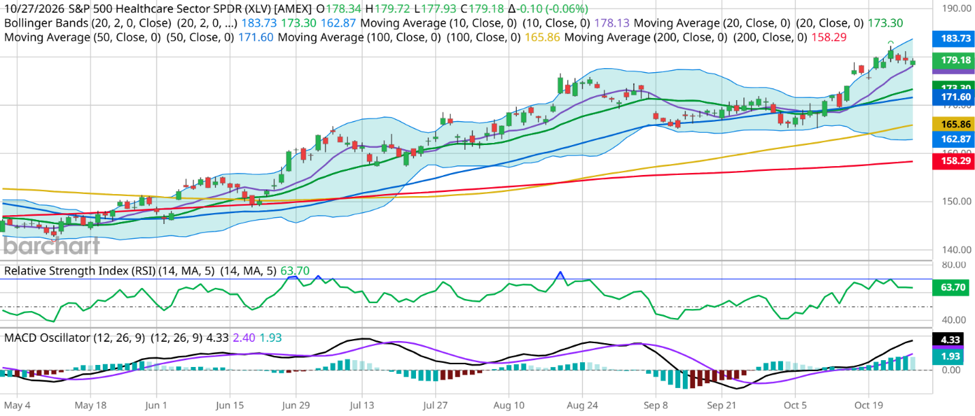
Health care (XLV): Drug pricing, insurance funding and Medicare policy all sit squarely in Washington’s sights, and the direction of the impact depends on who controls what. Pharmaceutical companies and health insurers tend to be the most exposed, since they are the ones most directly affected by pricing rules, subsidy decisions and reimbursement rates, while medical devices and services are usually a step removed. It’s one of the most policy-sensitive areas around any election, though it has also historically been one of the stronger groups in midterm years.
Knowing what commands to feed in to your AI trading tools is more than half the battle. This rapidly changing technology is a goldmine for traders but only if you know what to tell it to look for. Garbage in, garbage out. My Hidden Trade Detector outlines how to spot the trades that you miss if you aren’t telling your AI Agent what a market maker like me would. Here’s the trick. Click Now.
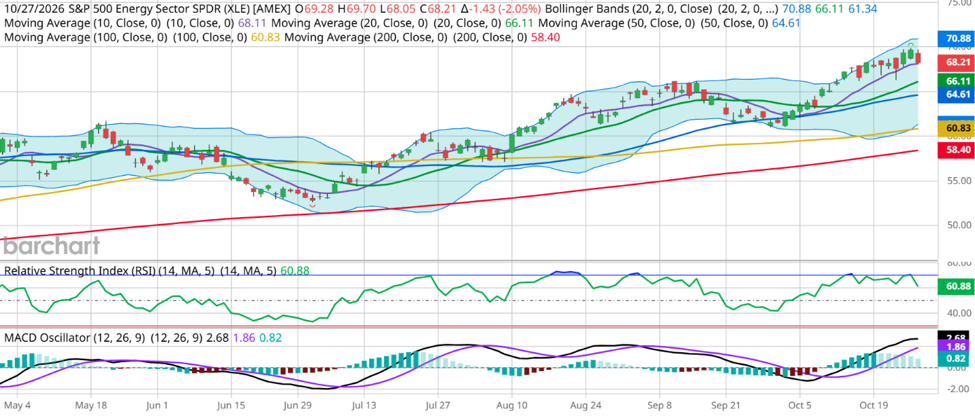
Energy (XLE): Regulation, permitting and the balance between traditional energy and energy-transition priorities can all shift with congressional control. A Republican-led Congress is generally associated with a deregulatory approach that favors producers, while a Democratic-led Congress could mean more scrutiny and more emphasis on the energy transition. Gasoline prices are also a campaign issue, and with the Iran headlines already pushing oil around, this group has more than one catalyst.
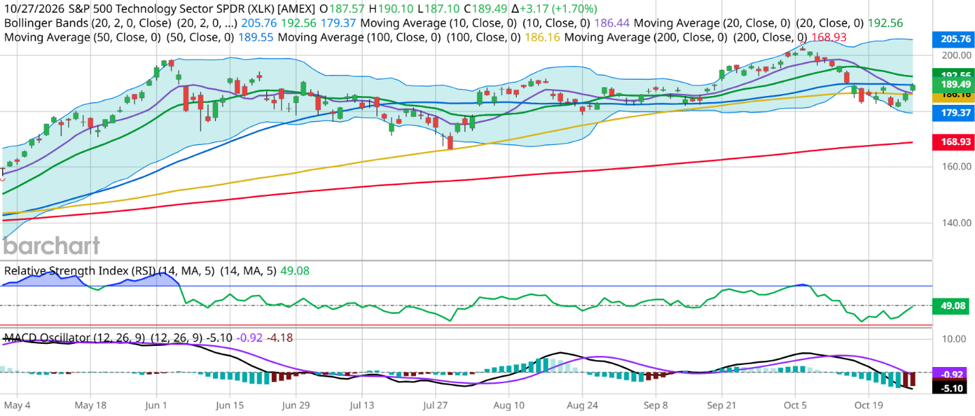
Technology and AI (XLK): After the gains this sector has posted, it’s more sensitive to any hint of increased regulatory scrutiny, whether that’s antitrust, data privacy or rules around AI itself. State-level races could also influence the buildout of AI data centers, which matters because so much of the market’s recent leadership is tied to that spending. The group is also concentrated in a handful of very large companies, so a single headline can move the whole ETF.
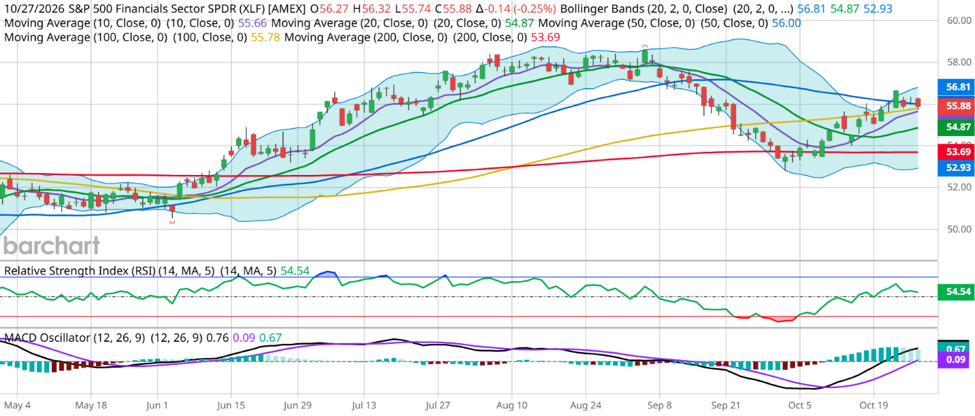
Financials (XLF): The debate between deregulation and tighter oversight can move banks and other financial names depending on who ends up with the gavels. This group also has to contend with the Fed, which just hiked rates last month and could do so again, so politics is only one of the forces at work. Historically, financials have tended to lag in midterm years, which is a reminder that a favorable policy narrative doesn’t always translate into price action.

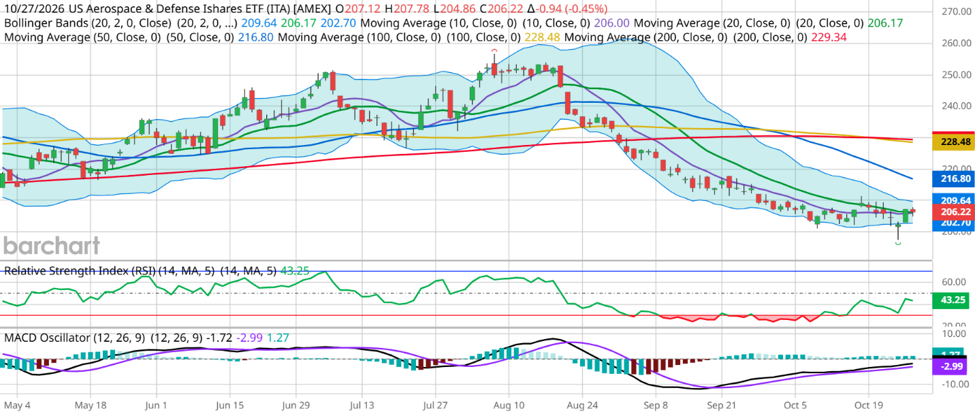
Defense and government contractors (ITA): These companies depend on budget negotiations, and elections have a way of setting up funding standoffs and debt ceiling fights in the months that follow. Defense spending tends to draw support from both parties, so the bigger question is usually timing rather than direction, and a drawn-out budget fight or shutdown threat can delay contract awards. With global tensions in the headlines, there’s also a demand story that runs independent of the election, which can help cushion any political noise.
Sectors least likely to be affected
On the other side of the ledger, consumer staples (XLP), consumer discretionary names like restaurants and most retailers (XLY), and travel-related stocks tend to move on consumer demand, product cycles and company earnings rather than on who controls Congress. These stocks aren’t immune to a broad market swing, but they generally don’t have the same policy exposure as health care or energy, which is why they can trade in a less correlated fashion around an event like this.
Using the Toolbox around the election
Here’s how I plan to approach it. Before the election, I’m not trying to predict the outcome. I want to find lower-risk names that are already being positioned ahead of the event. That means looking for stocks with strong projections that don’t hinge on a binary policy outcome, rather than the policy-sensitive names where one result could cut the trade in half overnight. The Stock Forecast Toolbox helps me filter for exactly that, so I’m not guessing which stocks the market is quietly leaning into.
The second use is just as important, and it comes after the votes are counted. In the days following the election, the market will start telling us what it thinks the results mean, and sectors and individual stocks will react at very different speeds. Instead of scrolling through headlines to figure out who’s moving, I can use the Toolbox to quickly see which stocks and sectors are getting a reaction and where the projections are shifting. The sector ETFs above make a handy scoreboard for that, and the Toolbox helps me drill down to the individual stocks leading the move. That lets me follow the money rather than chase the news. If you want to see how that works, you can try the Stock Forecast Toolbox free for 7 days.
If you have any questions, never hesitate to reach out.
Keith Harwood
Keith@OptionHotline.com









Recent Comments