
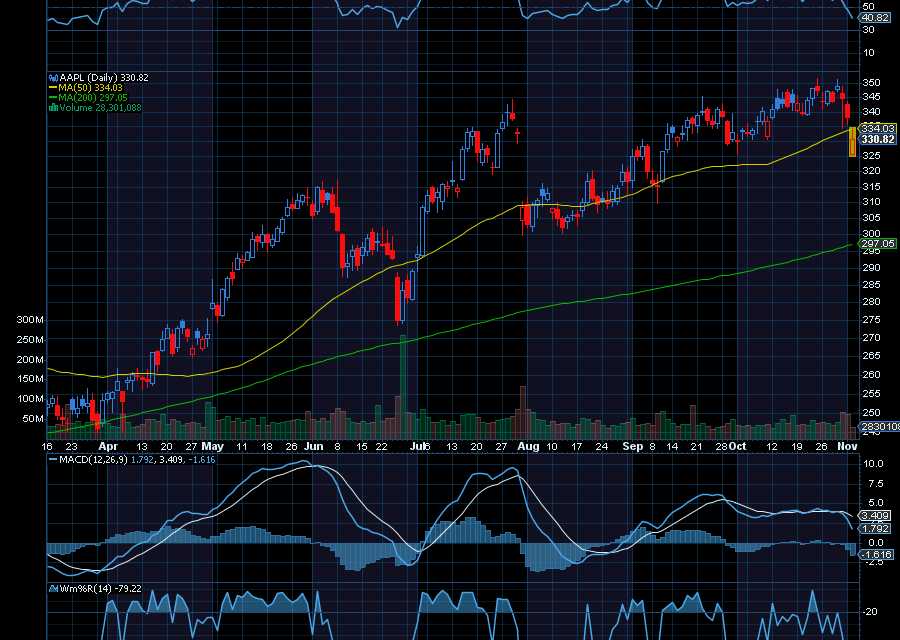
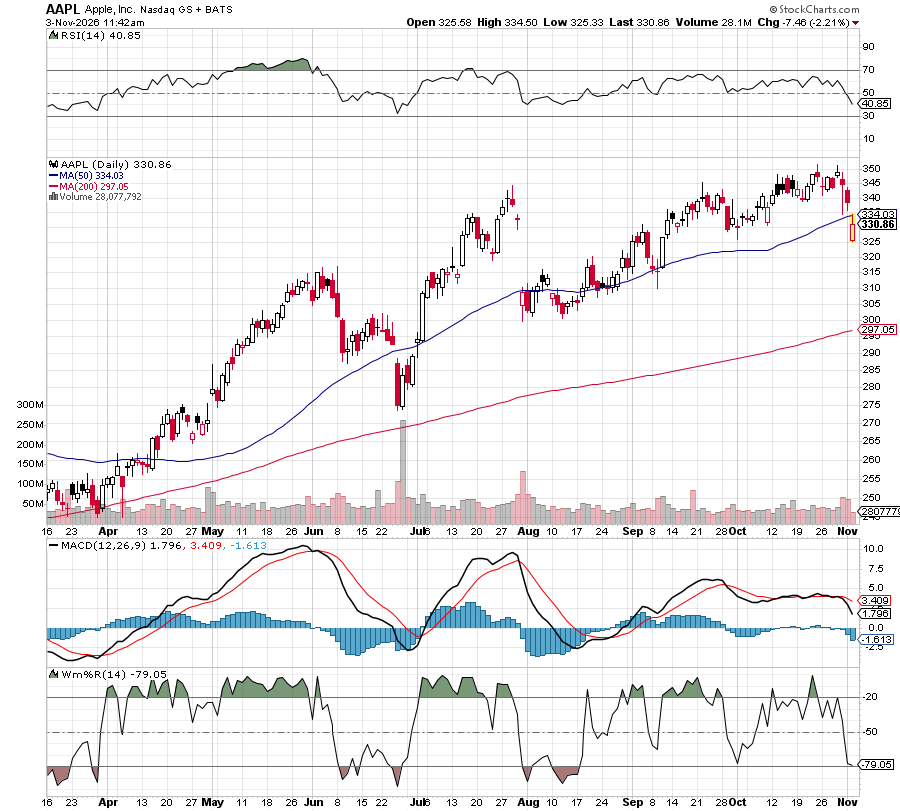
Apple (NASDAQ: AAPL) sold more iPhones than Wall Street expected. Its quarterly revenue and
earnings also performed better than forecasts. Yet shares fell.
However, most of the analysts highlighted following the report remain optimistic. They see
strong iPhone demand, opportunities in artificial intelligence, and a large customer base that
could support future growth. Still, several lowered their price targets, acknowledging that
Apple’s near-term challenges deserve attention.
The iPhone Is Still Doing Its Job
Apple reported fiscal fourth-quarter earnings of $2.10 per share, beating the $1.99 expected by
analysts. Revenue reached $114.48 billion, ahead of the $113.39 billion forecast.
The standout was the iPhone.
Sales totaled $57.58 billion, topping the $56.54 billion estimate and rising roughly 17% from a
year earlier. That matters because the iPhone remains central to Apple’s business, bringing in
substantial revenue while connecting customers to its apps, subscriptions, and other products.
Bank of America pointed to double-digit iPhone revenue growth in both the United States and
Greater China. The firm maintained its Buy rating and $370 price target.
It also highlighted Apple’s December-quarter revenue outlook of $154 billion to $158 billion,
above Wall Street’s roughly $153 billion expectation.
In other words, the report gave investors reasons to feel good about demand. The harder
question is how much profit Apple can generate from it.
Why Strong Sales Weren’t Enough
Apple expects gross margin of 45% to 46% for the current quarter, below the 46.3% analysts
anticipated. For a company generating well over $100 billion in quarterly revenue, even a small
percentage difference matters.
Higher memory-chip costs are a major pressure. Apple also faces expenses associated with
expanding its AI-powered Siri capabilities. Those costs help explain why healthy sales
expectations failed to reassure investors.
Evercore ISI sees the same tension. The firm maintained an Outperform rating and $380 target,
pointing to healthy hardware demand while warning that rising costs could limit earnings
growth. Its argument is easy to follow: selling more devices helps, but investors also need to
see Apple protect the money it earns on those sales.
The concerns extend beyond hardware.
Apple’s Services business includes offerings such as the App Store and iCloud. These businesses
give Apple opportunities to earn money from customers after they purchase a device.
Goldman Sachs analyst Michael Ng flagged weaker-than-expected trends in the App Store and
third-party licensing revenue. Nevertheless, he maintained a Buy rating, while reducing his price
target to $380 from $390.
Why Most Analysts Still See Opportunity
The bullish case rests on Apple’s ability to keep customers engaged and give them more
reasons to upgrade or purchase additional services.
Goldman sees a multiyear opportunity from the iPhone Duo and foldable designs. Bernstein,
which maintained an Outperform rating and $370 target, emphasized Apple’s position in
bringing AI features directly to consumer devices.
Citi kept its Buy rating and $365 target, highlighting opportunities through partnerships,
applications, iCloud+ subscriptions, and enhanced Siri capabilities. JPMorgan and Morgan
Stanley also remained positive, although both trimmed their targets. Their continued support
suggests they view the current pressures as manageable rather than reasons to abandon the
longer-term investment case.
For investors, the next test is whether strong holiday-quarter sales translate into stronger
earnings expectations. Watch memory costs, Services growth, and evidence that new AI
features encourage upgrades or additional spending.
Sincerely,
Ian Cooper








Recent Comments