
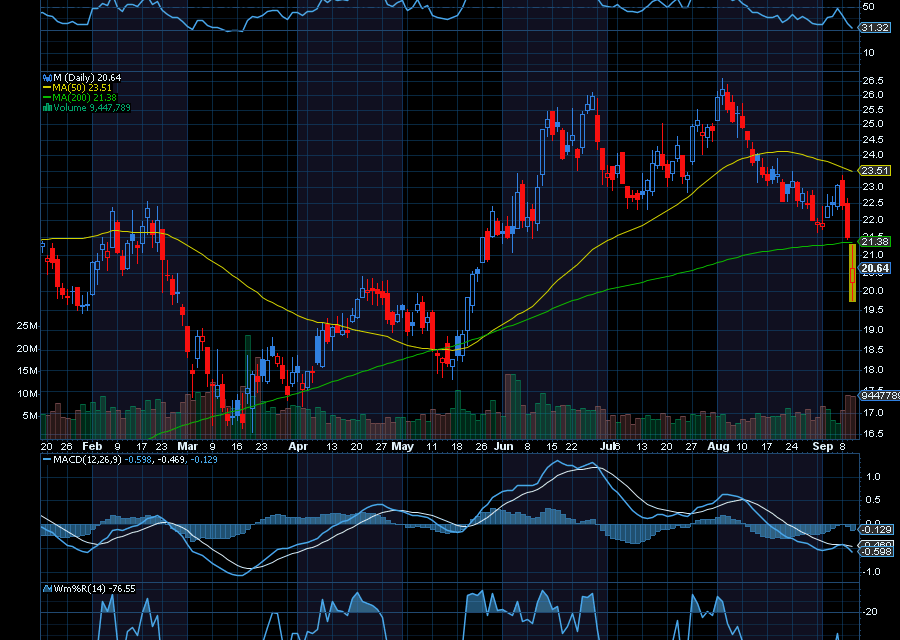
Keep an eye on Macy’s (NYSE: M).
The department store giant reported growth in its second quarter and raised its outlook for the full year, offering another sign that its three-year turnaround plan may be gaining traction. And it’s about to pay out a dividend of just over 19 cents a share on October 1 to shareholders of record as of September 15.
For the quarter, Macy’s Inc. reported a 2.7% increase in overall comparable sales. The retailer also reported adjusted earnings per share of 40 cents, compared with the 37 cents analysts surveyed by LSEG had expected. Revenue came in at $4.87 billion, narrowly beating the $4.83 billion analysts had anticipated.
Net income rose sharply to $169 million, or 62 cents per share, compared with $87 million, or 31 cents per share, a year earlier. Revenue, however, was only slightly higher, increasing from $4.81 billion a year ago to roughly $4.87 billion. Macy’s credit card business also provided a small boost. Credit card revenue increased 2%, or $3 million, during the quarter. The company attributed the improvement to what it described as a healthy credit portfolio and stable losses.
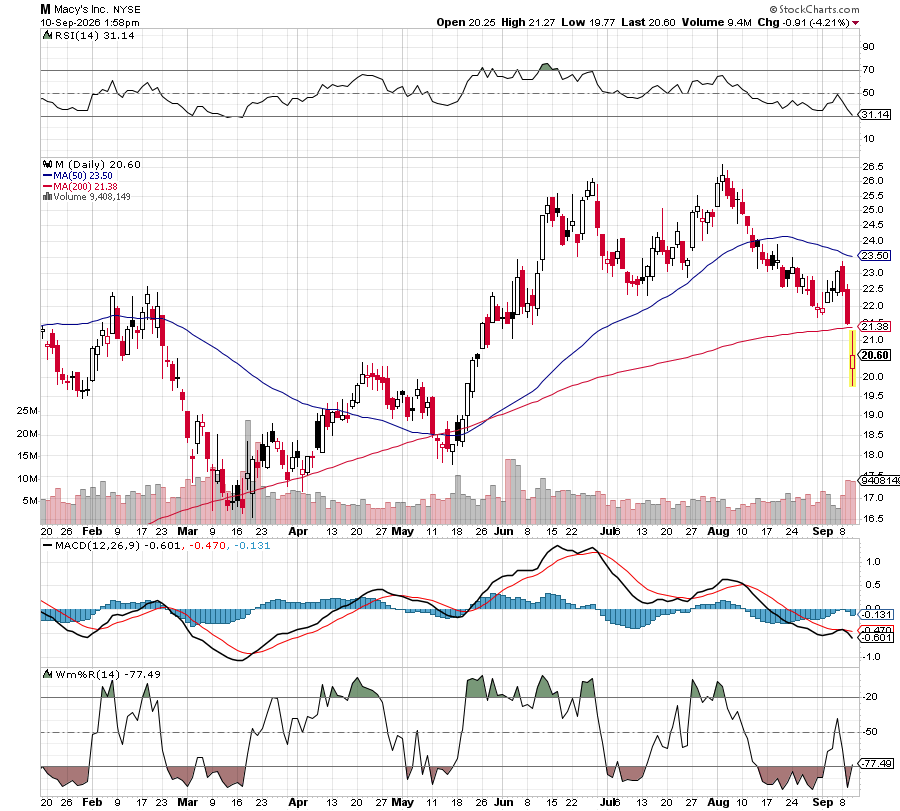

Macy’s Raises Its Full-Year Outlook
The stronger quarter also gave Macy’s enough confidence to raise its full-year expectations.
The company now expects net sales to come in between $21.68 billion and $21.83 billion, up from its previous forecast of $21.5 billion to $21.75 billion.
Macy’s also raised its comparable-sales outlook. It now expects comparable sales to increase between 1% and 1.5%, compared with its previous forecast of 0.5% to 1.2% growth.
Its earnings outlook improved as well. Macy’s now expects full-year adjusted earnings per share of $2.15 to $2.35, compared with its previous range of $2 to $2.20.
Investors Still Want More
Better-than-expected quarterly results are encouraging, but investors are still looking for evidence that Macy’s can produce sustainable growth in an industry that has been under pressure for years.
Consumers are also becoming increasingly divided based on income. Spring said Macy’s is seeing a clear bifurcation between shoppers with more discretionary money and those dealing with higher costs for essentials such as food, fuel and interest payments. Higher-income consumers, he said, are still willing to spend on fashion and personal style. Meanwhile, shoppers with tighter budgets are becoming more focused on value and off-price merchandise. That could actually play into Macy’s strategy. The company operates several brands and store formats designed to appeal to different types of shoppers, giving it an opportunity to capture spending across income levels.
Can the Turnaround Last?
Macy’s is now approaching the final stretch of Spring’s three-year turnaround plan. The strategy has centered on investing in stores that have the potential to perform well, improving the customer experience and finding new ways to make its brands more relevant.
The latest results don’t mean Macy’s has completely turned the corner. But they do suggest that some of those investments are beginning to show results.
Sincerely,
Ian Cooper







Recent Comments