
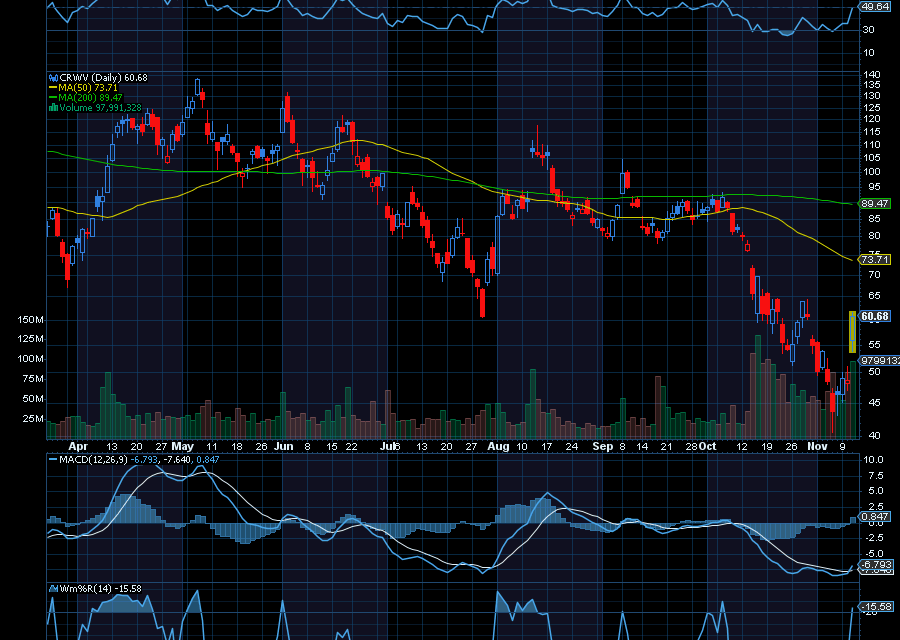
CoreWeave (NASDAQ: CRWV) just gave nervous investors something they needed: a breath of fresh air, and evidence that its business is still growing quickly, even as questions about its spending and borrowing weigh on the stock.
The artificial intelligence cloud provider reported stronger-than-expected third-quarter revenue, a smaller loss than analysts anticipated, and a higher sales outlook. In fact, its EPS loss of $1.27 beat by 28 cents. Revenue of $3.66 billion, up 169.1% year over year, beat by $120 million. Revenue backlog was about $132.5 billion as of the end of September.
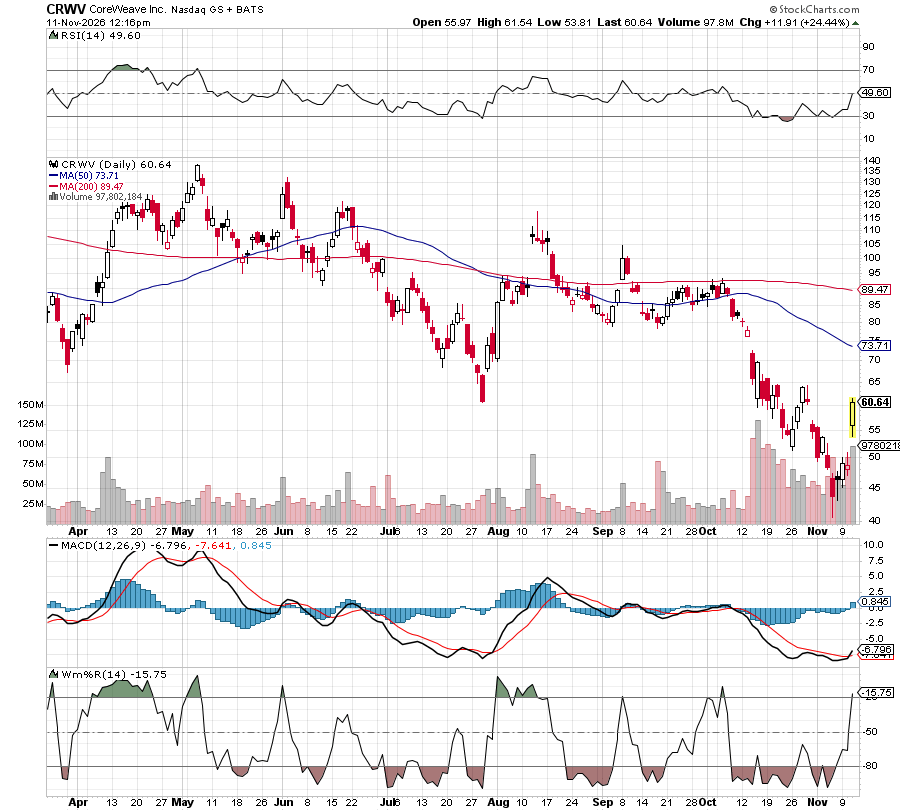
That’s welcome relief for a stock that had fallen almost 65% from its 52-week high. Still, one encouraging quarter won’t settle every concern. CoreWeave must show it can turn demand into lasting profits while paying for an expensive expansion.
The Outlook Is Getting Stronger
Management also raised its expectations for the full year.
CoreWeave now forecasts 2026 revenue of $13 billion to $13.3 billion, compared with its previous range of $12.4 billion to $13.2 billion. The new range sits above the $12.88 billion consensus estimate cited in the supplied report.
Adjusted operating income is expected to reach $1.275 billion to $1.375 billion. At the midpoint, that is a 26% increase from the previous forecast. The company also expects to finish the year with an annual revenue run rate of $20 billion to $21 billion. That figure describes the annualized pace of business at year-end; it does not mean CoreWeave will collect that much revenue during 2026.
Meanwhile, adjusted operating margins reached double digits one quarter earlier than management had planned.
Wall Street Sees Opportunity
Bank of America maintained a Buy rating and a $140 target, arguing that customer prepayments, vendor financing, and loans backed by contracts make funding needs manageable.
Deutsche Bank remained bullish with a $125 target, highlighting execution and improving business economics. Goldman Sachs, Citi, UBS, and JPMorgan also maintained positive ratings.
Morgan Stanley took a more cautious approach with an Equal Weight rating and a $70 target. It welcomed the results but wanted more evidence that planned financing would come together. Barclays also maintained Equal Weight.
Sincerely,
Ian Cooper







Recent Comments